바닥에 색이 필요할 때
There are many ways to introduce color into a space, but the color of the floor has an especially strong impact. Because it occupies such a large part of our field of vision, the same color can change the atmosphere of a space more dramatically on the floor than on the walls.
August 21, 2026
There are many ways to introduce color into a space, but the color of the floor has an especially strong impact. Because it occupies such a large part of our field of vision, the same color can change the atmosphere of a space more dramatically on the floor than on the walls.
You might want a bold, vivid color, or you may prefer to introduce it more subtly through the texture of a material. Once you consider seams, surface feel, maintenance, and installation, there are quite a few options. Here are some materials worth exploring when your floor needs color.
1. Linoleum
For soft, warm color
Linoleum is available in a wide range of colors and patterns, while maintaining a surface that does not feel overly cold or artificial. Options range from solid colors to marbled patterns that blend multiple tones. It can be used across many settings, from calm residential interiors to commercial, educational, and workplace environments that call for more color.
2. Resin and Microcement
For vivid color and a seamless surface
Resin and microcement flooring can be tinted to create a broad range of colors. Because they can be installed without grout lines or visible joints, the entire floor reads as one continuous plane of color.
Depending on the material and finishing method, the surface can range from glossy to matte. Color chips or aggregates can also be added to create a more distinctive appearance. The condition of the substrate and the quality of installation are especially important, as cracks or delamination may occur if the base is not properly prepared.
Self-Leveling Floors Through Built Projects: Aesop and Lemaire
3. Woven Vinyl
For a textile-like appearance with easy maintenance
Woven vinyl is made by processing PVC into fine strands and weaving them like a textile. It has a texture similar to carpet while being relatively easy to maintain and resistant to moisture and stains.
Depending on the color and weave, it can create solid, mélange, striped, or patterned surfaces. Many products use subtle combinations of multiple tones rather than intense primary colors, making woven vinyl useful when you want to add both color and texture to a floor.
Woven Vinyl: A Low-Maintenance Alternative to Carpet
4. Carpet
For a soft floor with a warm atmosphere
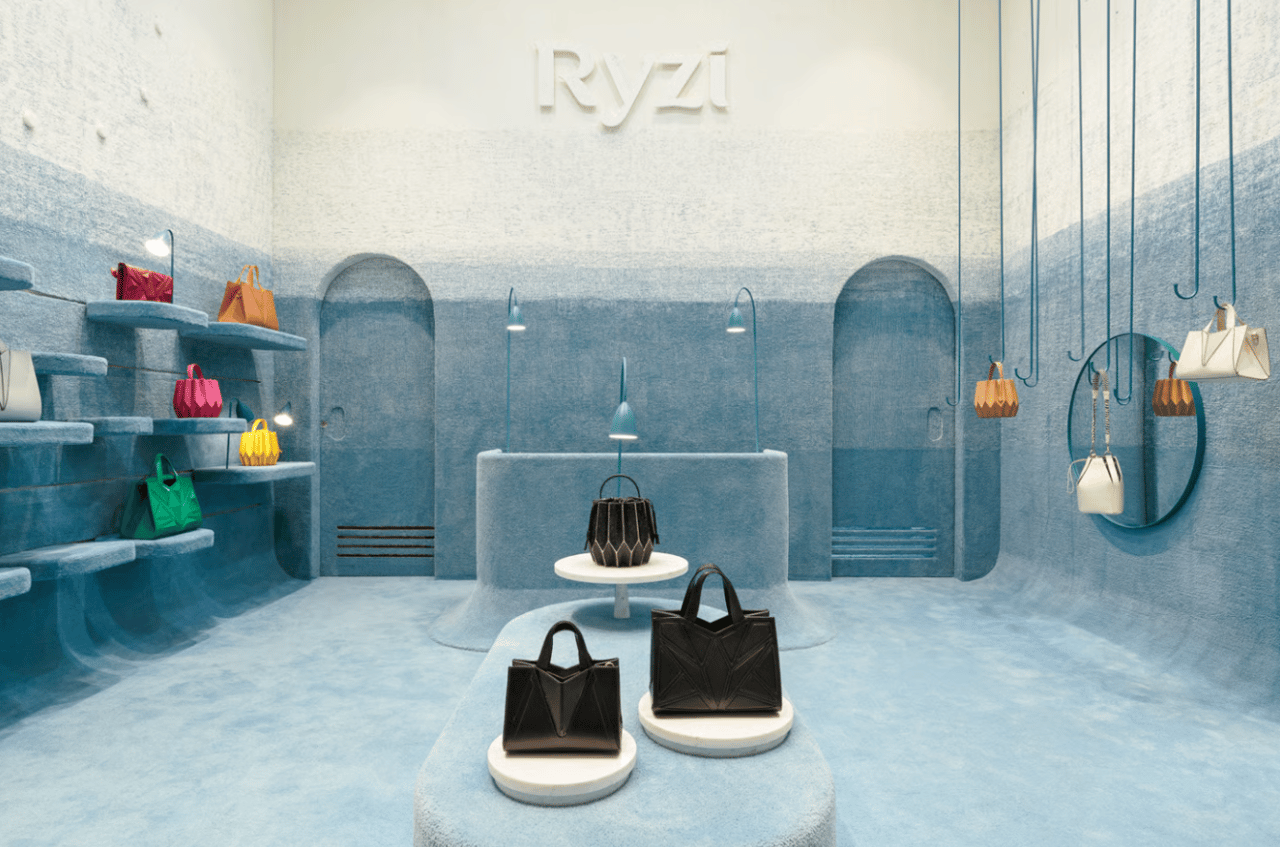
Carpet is available in a broad range of colors, but its appearance also changes significantly depending on pile length, density, and sheen. A short, dense pile creates a clean, graphic look, while a longer, softer pile gives the color greater depth and richness.
Carpet works well in offices, hotels, lounges, and residential spaces where acoustics and comfort underfoot matter. Cleaning and maintenance requirements should be considered in relation to how the space will be used.
How Much Do You Know About Custom Carpet?
5. Tile
For designing with size and grout as well as color
Tile comes in an exceptionally wide range of sizes, from small mosaics to large-format slabs. The glaze, sheen, texture, and printing method can create anything from a solid-colored floor to an intricate pattern.
Small tiles introduce rhythm through a dense grid of grout lines, while large-format tiles minimize joints and create a broader, more continuous field of color. The grout can be matched to the tile or used as a contrasting design element.
Retro Mood Created by Intersecting Grids of Color
6. Floor Paint
For a quick transformation of an existing floor
Floor paint is a relatively simple way to add color over an existing concrete or timber surface. It is worth considering for temporary pop-ups, studios, budget-conscious projects, or spaces that need a quick visual change.
Use a dedicated floor paint designed to withstand foot traffic and wear rather than standard wall paint. Proper surface preparation and priming are also essential.
7. Vinyl Tile
For colorful flooring that is easy to install and replace
Vinyl tile makes it relatively easy to introduce a variety of colors and patterns. Solid-colored tiles can be combined to divide zones or create graphic layouts, while many other products reproduce the appearance of stone or timber.
Depending on their thickness and construction, some products also provide added comfort underfoot or acoustic benefits. Because the flooring is installed in individual tiles, damaged areas can be replaced separately. This makes it particularly useful in commercial spaces and offices where maintenance is important.
8. Rubber Flooring
For resilience and vivid color
Rubber flooring is resilient and relatively slip-resistant, which is why it is commonly used in gyms, educational spaces, staircases, and transportation facilities.
Today, the range extends far beyond basic black and gray. Options include vivid colors, speckled patterns, smooth finishes, and raised textures. It is a useful choice for spaces where durability and comfort underfoot are important.
Bathroom, Rubber Flooring, Circles, and Color
Which Color Flooring Is Right for Your Space?
The same color can look and feel very different depending on the material.
For a warm and comfortable atmosphere: linoleum or carpet
For rich color and a seamless surface: resin or microcement
For textile texture and easy maintenance: woven vinyl
For a broad range of options and creative use of grout: tile
For a quick and simple transformation: floor paint
For easy replacement and maintenance: vinyl tile
For resilience and durability: rubber flooring
Rather than choosing by color alone, consider the sheen and texture of the surface, whether it has seams, how it feels underfoot, how it needs to be cleaned, and how it will change over time. The floor may serve as a backdrop, but the material used to create its color can significantly shape the atmosphere and character of the space.
Are You Working on a Space?
Enter your desired image or project requirements to discover colorful flooring materials that could work for your project on Conc.
Did this help? and share it with your friends. Did something come to mind? Got a question? Let the author know. New to Conc? Conc is making tools for people who work with materials.